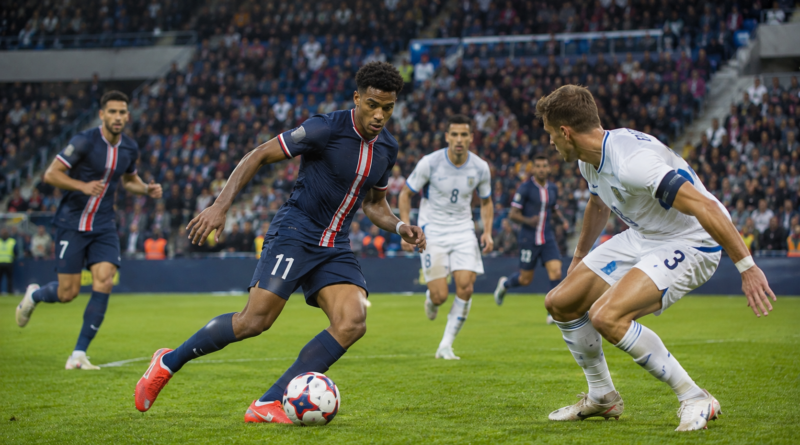
The Freedom to Create: Individual Brilliance and the Changing Face of French Football
French football has long been associated with technical creativity, athletic ability and players who can change the direction of a match through individual inspiration. Ligue 1 provides a fascinating environment for these qualities, bringing together experienced professionals, emerging talents and footballers with different technical backgrounds. Some encounters are decided by carefully organised team movements, while others are transformed by a moment of improvisation: a sudden change of direction, an unexpected pass or a successful challenge in a crowded attacking area. For supporters who want to appreciate these details, матчи чемпионата Франции в записи offer an opportunity to revisit the entire performance and discover how individual actions influence the wider story of a match.
Individual Talent as a Competitive Advantage
Every football team needs a collective structure, but individual ability remains one of the most important factors in creating opportunities. A player who can beat an opponent in a one-on-one situation forces the defending team to reconsider its positioning. Another who can deliver an accurate pass under pressure may open a route through a defensive formation that appeared difficult to penetrate.
Ligue 1 has a particularly interesting relationship with this type of football. The competition brings together players with different physical and technical characteristics, creating encounters in which individual duels can become decisive. Quick wingers challenge defenders in wide areas, technically gifted midfielders look for openings between the lines, and forwards attempt to use movement and close control to create space near the penalty area.
Individual brilliance, however, is not simply about spectacular dribbling. It also involves recognising when to take a risk and when to choose a simpler solution. A player may attract two defenders before releasing the ball to an unmarked teammate. Another might deliberately slow down an attack, waiting for a supporting run rather than forcing an immediate pass.
These decisions are part of football intelligence. Watching the complete match makes it easier to understand how individual qualities contribute to collective success and why certain players become influential even when they are not directly involved in scoring.
The Art of the One-on-One Duel
One-on-one situations are among the most revealing moments in football. They test a player’s balance, coordination, acceleration and ability to make decisions while an opponent is trying to limit every available option.
For an attacking player, the challenge is to create uncertainty. A change of pace can force a defender to adjust his stance, while a quick movement of the ball may open a narrow route towards the penalty area. Some players rely on acceleration, others prefer close control and feints, and technically versatile footballers can combine several methods within a single movement.
Defenders face an equally demanding task. They must remain patient, control the distance between themselves and the attacker and avoid committing too early. A poorly timed challenge can allow the opponent to move into a dangerous area, while excessive caution may give an attacker enough time to deliver a cross or find a teammate.
These duels often have consequences beyond the immediate action. If a winger repeatedly beats his direct opponent, the defending team may send an additional player to cover the flank. This can create space elsewhere, allowing the attacking side to move the ball into the centre or switch play to the opposite wing.
A full match recording reveals how these individual battles develop. One successful dribble may be an isolated moment, but repeated victories in the same area can gradually change the entire defensive structure of the opponent.
Creativity in the Midfield
The midfield is where technical ability and tactical understanding frequently come together. Players must operate in crowded spaces, make decisions quickly and recognise opportunities that may exist for only a fraction of a second.
A creative midfielder can influence the game through several different actions. He may receive the ball with his back to goal and turn away from pressure, deliver a diagonal pass that changes the direction of an attack or use a short combination to move the team into an advanced position.
The most effective players are not necessarily those who attempt the greatest number of difficult passes. They are often the ones who understand when a creative solution is required. Sometimes a simple pass into an open space is more valuable than an ambitious attempt to break through several defenders.
This ability to choose the right moment is particularly important when facing compact defensive formations. Opponents may deliberately leave possession to the midfield, concentrating instead on protecting the areas around their penalty box. In these situations, creativity becomes a process of patience and observation.
A player may move towards the touchline to draw a defender away from the centre. A teammate can then occupy the space that has become available, creating a new passing option. These movements may look ordinary when viewed separately, but together they can produce a dangerous attacking situation.
Watching a complete match allows supporters to recognise the thinking behind these combinations. It becomes possible to appreciate not only the final pass but also the movements that made it possible.
Speed, Strength and Technical Balance
Modern football demands a combination of physical and technical qualities. Speed can create an advantage, but it is most effective when supported by control and awareness. A fast player who cannot manage the ball at high intensity may struggle to convert a promising run into a useful attacking action.
The same applies to physical strength. Winning a shoulder-to-shoulder challenge can help a forward retain possession, but the ability to protect the ball must be combined with accurate distribution and intelligent positioning.
Ligue 1 offers a variety of physical profiles and playing styles. Some attackers rely on acceleration over short distances, while others use strength to hold off defenders and bring teammates into the game. Midfielders may combine endurance with technical precision, allowing them to remain influential throughout demanding encounters.
These qualities become particularly important during transitions. When possession changes, players must react quickly while maintaining control of the ball. A forward may need to accelerate into open space, while a defender must adjust his body position to prevent an opponent from reaching the ball first.
The full match reveals how physical attributes influence performance over time. It shows whether a player can maintain his effectiveness in the closing stages, how opponents respond to his strengths and whether the team uses those qualities in a coordinated way.
Improvisation Within a Team System
Creativity is often associated with freedom, but professional football requires individual expression to operate within a collective structure. A player who constantly abandons his position can create problems for teammates, even if his technical ability is exceptional.
The challenge for a manager is to provide enough tactical organisation while allowing talented footballers to make unexpected decisions. This balance can be seen in the positioning of attacking midfielders, wingers and forwards.
Some players receive freedom to move across the front line, creating uncertainty for defenders. Others are encouraged to remain wide and stretch the opposition before moving inside at the right moment. A striker may drop deeper to participate in combinations, leaving space for an advancing midfielder to attack the penalty area.
These roles require mutual understanding. When one player moves away from his usual position, another must recognise the opportunity to occupy the space he has left. If the timing is correct, improvisation can make the team more difficult to defend against.
This relationship between structure and freedom is one of the most interesting elements of modern football. A complete recording helps reveal how often players exchange positions, how teammates respond and whether individual creativity improves the team’s attacking balance.
The Value of Different Football Backgrounds
French football has developed within a diverse sporting environment, influenced by different regions, coaching traditions and international playing styles. Clubs bring together footballers with varied experiences, and this diversity can produce interesting combinations of technical ability, tactical understanding and personal expression.
Some players arrive with strong backgrounds in structured academy systems. Others develop through competitive environments that place greater emphasis on improvisation and individual initiative. When these approaches meet within one squad, they can create a distinctive footballing identity.
This diversity is visible in the way teams build attacks and respond to pressure. A technically accomplished midfielder may bring composure to a physically demanding contest, while a direct winger can add unpredictability to a team that prefers controlled possession.
The process of integrating different playing backgrounds is not always immediate. Players must learn one another’s movements, understand tactical instructions and develop the trust needed to combine under pressure. Successful teams gradually turn individual qualities into shared strengths.
For supporters, following a complete match can reveal how these relationships develop. It provides a chance to observe which combinations work naturally, how players adapt to unfamiliar roles and why certain partnerships become increasingly important over the course of a season.
The Importance of the Final Decision
Technical ability attracts attention, but the quality of a footballer’s final decision often determines whether an attacking move becomes effective. A player may beat two opponents and still waste the opportunity with an inaccurate pass. Another may make only one movement before delivering the decisive ball.
The final decision can involve choosing between shooting, passing, crossing or retaining possession. Each option depends on the positions of teammates and defenders, the distance from goal and the amount of time available.
For attackers, this requires a combination of awareness and composure. They must recognise whether the goalkeeper is positioned to cover the near post, whether a teammate has a better shooting angle and whether an additional touch will improve or reduce the opportunity.
Midfielders face similar decisions when selecting the final pass. A through ball may be effective if the forward has enough space to accelerate, while a short combination could be safer against a compact defensive line.
These moments are often the difference between a promising attack and a goal. Watching the full sequence helps viewers understand why a player chose one option rather than another and how quickly the available possibilities changed.
Technology and the Modern Study of Individual Performance
Technology has transformed the way individual football performances are evaluated. Video analysis allows coaching staff to study a player’s movement, technical actions and decision-making in different match situations. Tracking systems provide information about acceleration, distance covered and the physical demands of repeated high-intensity efforts.
These tools help clubs understand more than the visible outcome of an action. Coaches can examine whether a winger regularly receives the ball in advantageous positions, how effectively a midfielder creates passing options and how an attacker reacts after losing possession.
Technology also influences the way supporters revisit matches. Digital video platforms make it possible to return to particular sequences, compare different camera angles and examine the movements that preceded a decisive moment. Broadcast replays and statistical information provide additional context for understanding individual contributions.
For viewers interested in the creative side of Ligue 1, this creates new opportunities to appreciate technical details. A successful dribble can be examined in relation to the defender’s positioning, while a goal may reveal several movements that took place before the final shot. Technology adds precision to observation without replacing the instinct and spontaneity that make football entertaining.
Why the Full Match Reveals the Real Character of Ligue 1
French football is compelling because it combines individual talent with collective ambition. Its most interesting encounters often feature a mixture of technical creativity, physical challenges and tactical adjustments that cannot be understood through isolated highlights.
A spectacular dribble may change the direction of an attack, but the team’s response determines whether the opportunity becomes a goal. A clever pass can break a defensive line, yet the movement of supporting players is often what makes the pass effective. Even the most gifted footballer depends on the structure around him.
Watching the complete match allows supporters to follow these relationships. It reveals how individual players influence the wider game, how teams adapt to different opponents and how creative decisions develop under pressure.
Ligue 1 continues to offer a broad range of footballing personalities and playing approaches. Some matches are shaped by patient combinations, others by direct attacking movement and individual duels. Their common appeal lies in the unpredictable relationship between preparation and improvisation.
For viewers who appreciate the artistry of football, the full ninety minutes provide a much richer experience than a collection of decisive incidents. The most memorable action may last only a few seconds, but the creativity behind it is often present throughout the entire match.